Salesforce AI Platform

Salesforce sponsored our team at Indiana University to explore how AI could help marketers inside Marketing Cloud. Over a semester we studied how campaigns get made, narrowed eight ideas down to one, and designed Einstein QA Check: an AI reviewer that catches brand, accessibility, link and merge-field errors in an email before it reaches a customer.
I worked across research and product design, from interviews and synthesis to wireframes, the prototype and the high-fidelity screens. We presented the final concept to the Salesforce team at Salesforce Tower in Indianapolis.
Product design & research
Anna
Harshesh
Isha
Nikith
Prasanna
Ram
Zoe
Amie Levasseur
Kaustubha Patil
Scott Pitkin
The prompt
The brief from Salesforce
AI platform for content experimentation and optimization in Marketing Cloud.
Marketing Cloud
Where marketers build, send and measure campaigns across email, SMS, push and social.

Einstein
Salesforce's AI, with predictive and generative features across sales, service, marketing and commerce, and already working its way into Marketing Cloud.
The brief was open on purpose, so before deciding what to design, we set out to understand how a marketer's work actually flows.
Desk research
How campaigns are planned and built, where AI already shows up in marketing tools, and what the technology could realistically do.
Interviews with marketers
Four marketers, three of them working in Marketing Cloud, recruited through marketing communities on Reddit and LinkedIn. We asked about their workflows, daily pain points and the tasks that eat their time.
Mapping the journey
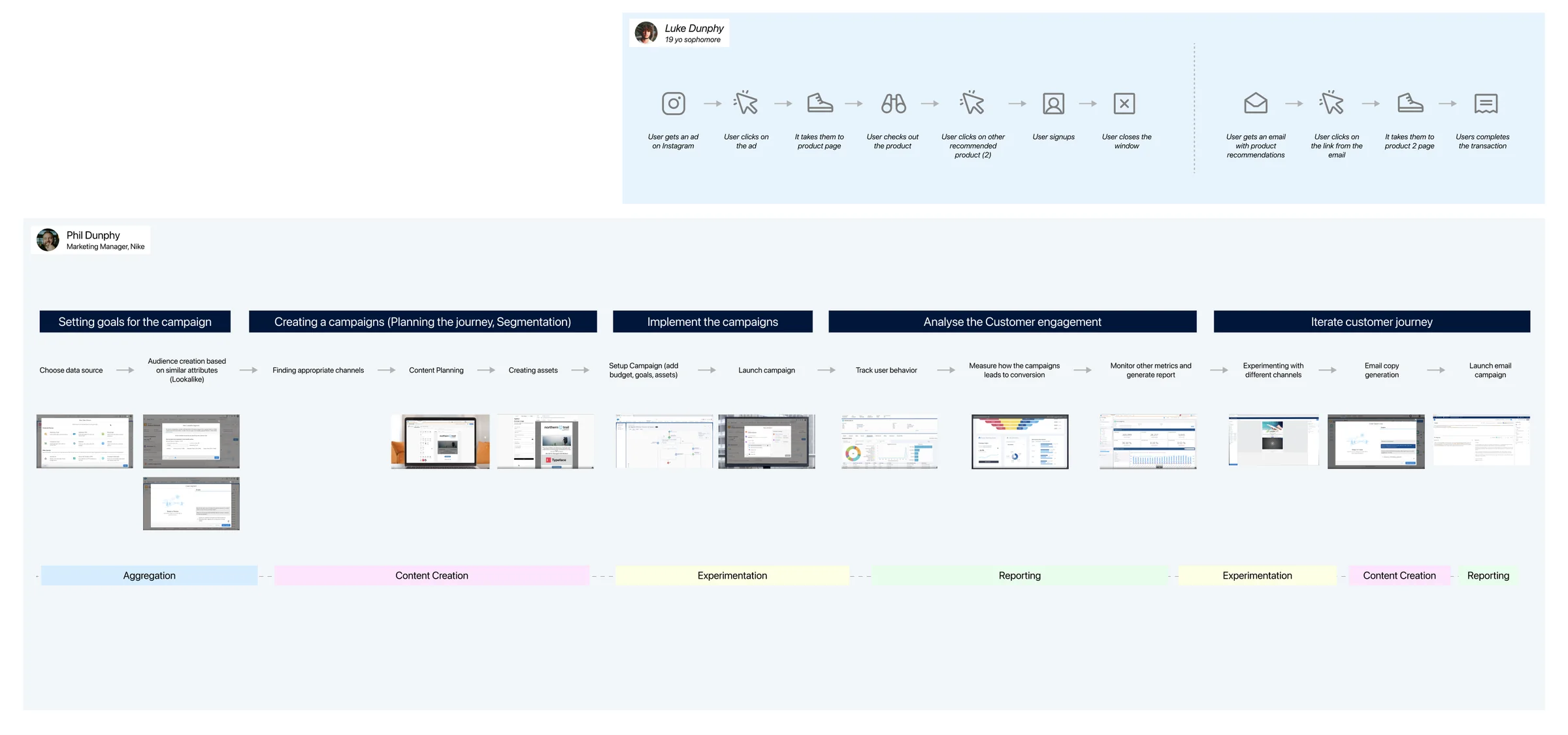
We mapped what we heard into the journey of a marketing manager running a campaign, from gathering data and creating content to experimenting and reporting, and of the shopper on the other end of it.
Email at scale
Email is the channel brands lean on most, and Marketing Cloud is built to send it.
90%+
of marketers say email is critical to their company's success.
Source: Litmus, State of Email 2021One email, many hands
A single campaign email carries work from designers, the brand team, content writers and developers, and the marketer is the one who pulls it all together. 60% of companies need at least four people to review an email before it goes out (Litmus).
Never just one email
A campaign is a series of emails, and a marketer runs several campaigns at once. Every one of those emails goes through the same assembly and the same review before it can be sent.
The problem
We told the problem through Jack, a marketer with too many campaigns and one email that has to be perfect.
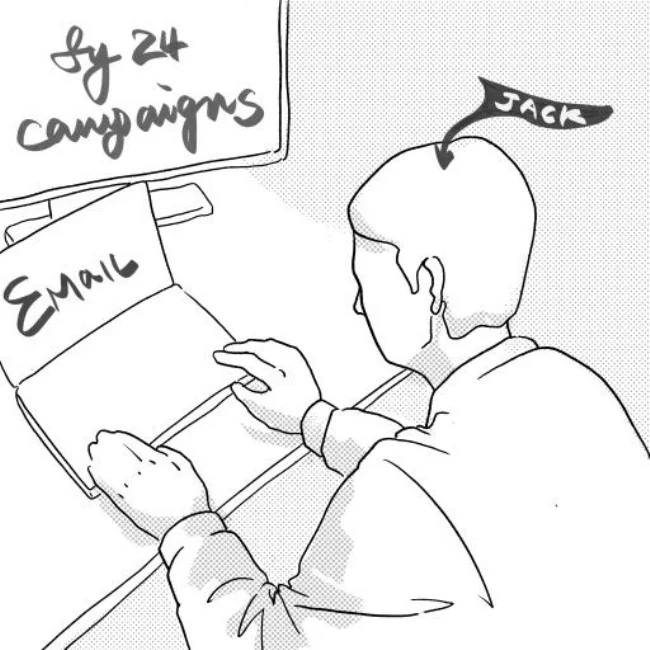
1. Jack is working on several campaigns at once
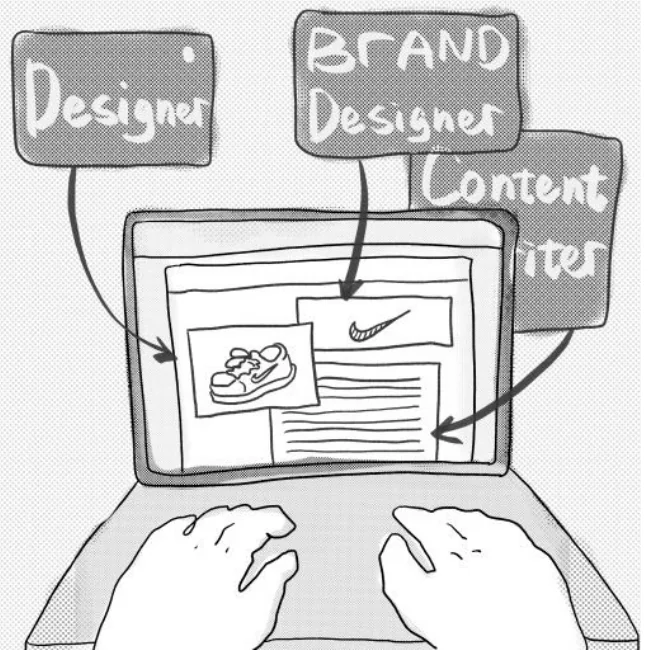
2. He just received the content for one email
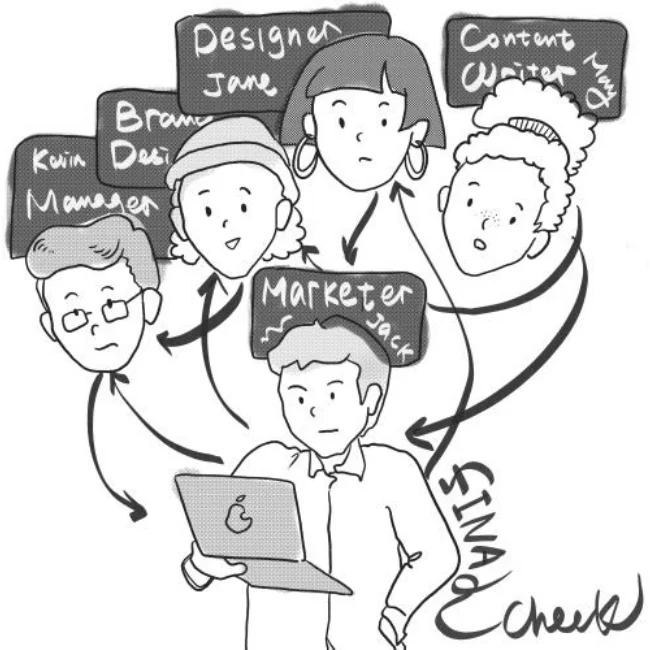
3. He pieces the parts together into one story
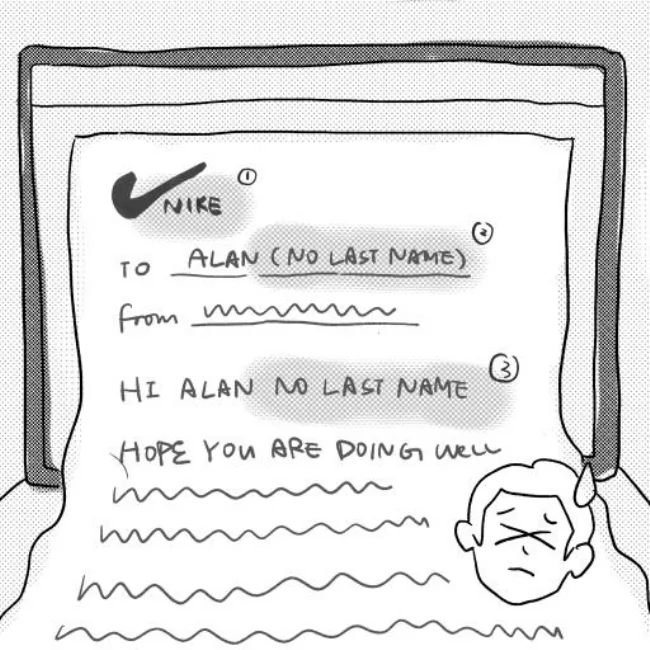
4. He notices errors along the way…
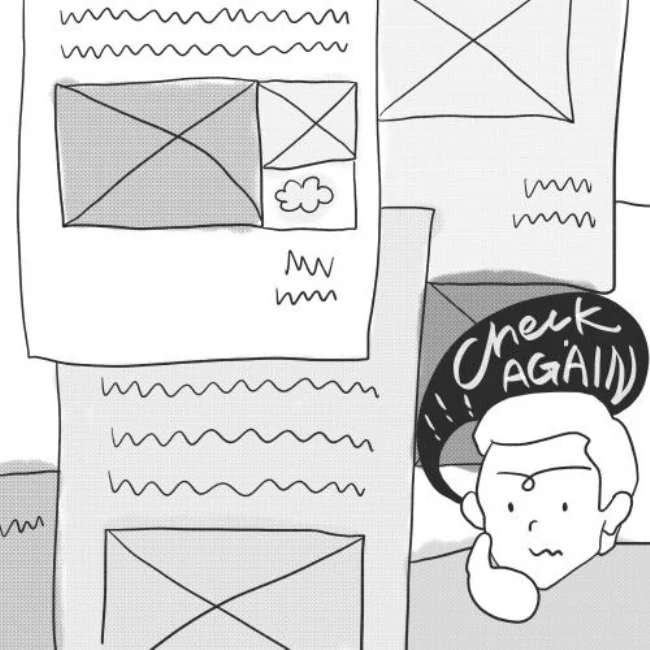
5. …and realizes he has to check it all again
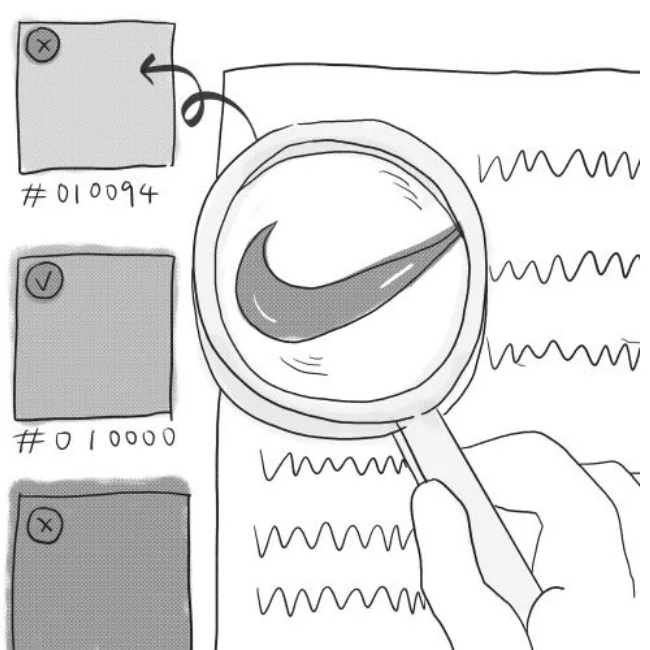
6. He fine-tunes every detail until it’s right
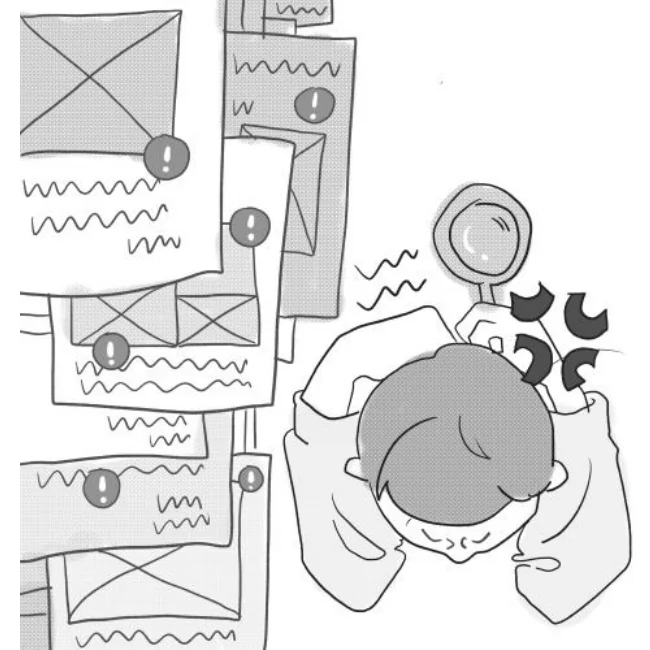
7. Then realizes there isn’t enough time for this
What this leads to
96%
of emails had content issues, from broken images to broken links.
Source: Litmus, 5 million emails testedAnd only 23.3% of marketers use an extensive checklist before they send (Fulcrum Tech). The rest rely on a short list, or on catching mistakes by eye.
Research
Across the interviews and our desk research, the same picture kept coming back: marketers own the result, but almost none of the pieces.
Many hands, one owner
Marketers rely on designers, writers, brand teams and often outside agencies. Content arrives in pieces, and agencies create silos that make sharing data hard.
Modular, but fragmented
Interviewees liked how modular Marketing Cloud is, but said the modules spread one campaign across too many places.
Setup, again and again
Campaigns and customer journeys can't be cloned, so every new one is rebuilt from scratch.
The check is left to the end
Brand and quality checks fall to the marketer at the very end of the process, when there's the least time left.
Finding the idea
Our first read: teach marketers to use AI
Salesforce had just rolled out generative AI across Marketing Cloud, so our first hypothesis was that marketers didn't know how to use it well. Our midterm storyboard followed a marketer who asks AI to write a campaign email, gets something generic, can't connect the prompt-writing tips to her own work, and goes back to doing it by hand.
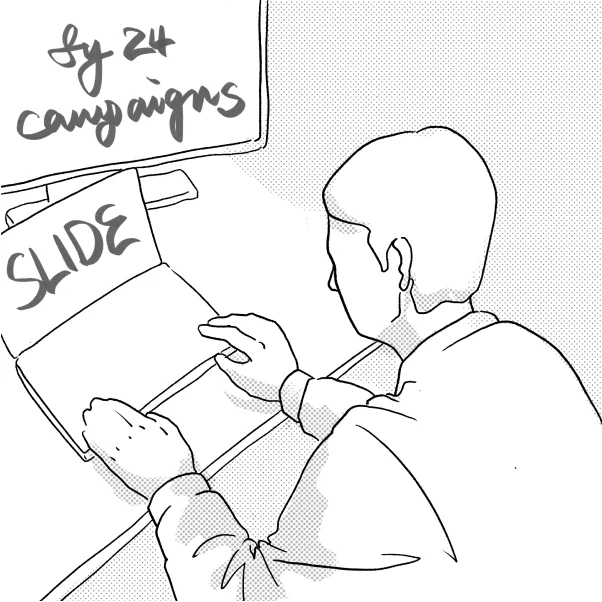
1. Planning the campaign
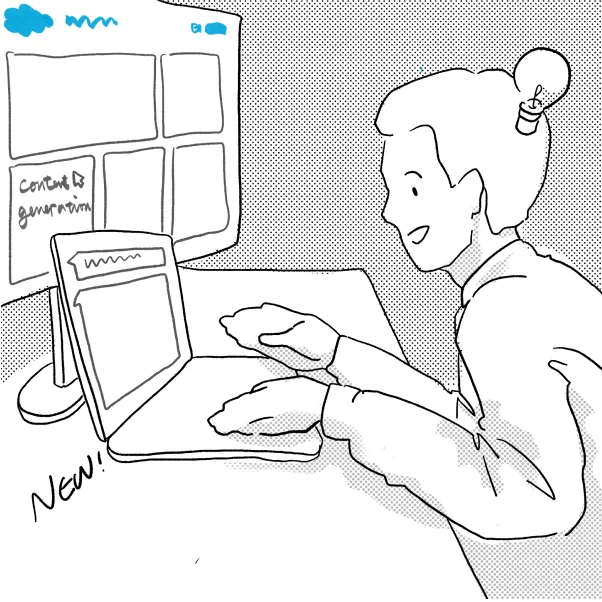
2. Asking Salesforce AI to draft the emails
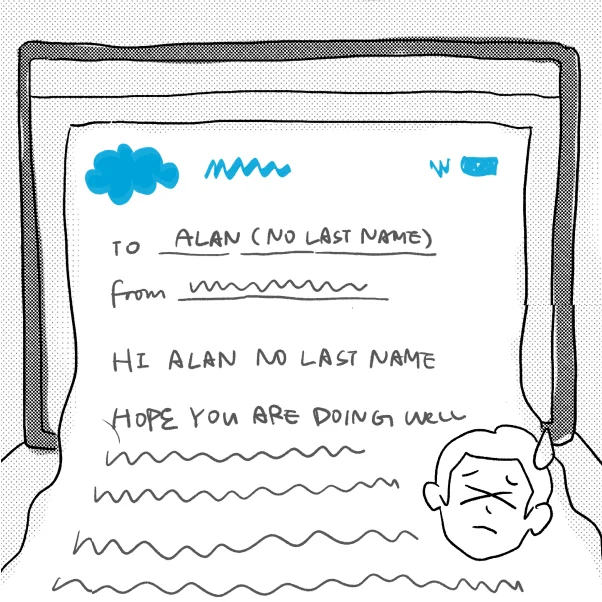
3. The draft isn’t personal enough
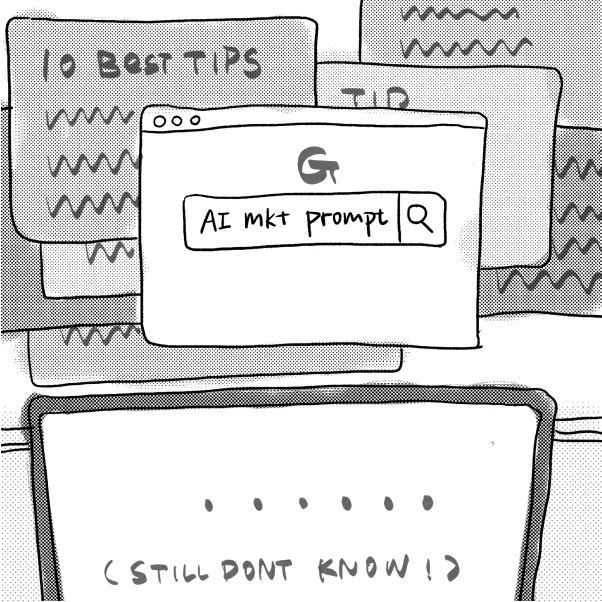
4. Prompt-writing tips don’t relate to the work
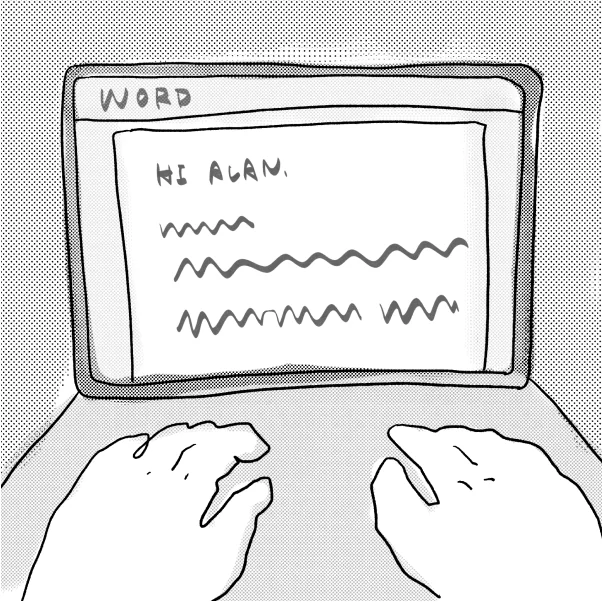
5. Back to writing it by hand
Our question at midterm
How might we help marketers get acquainted with AI and apply it efficiently to their workflow?
From eight ideas to three
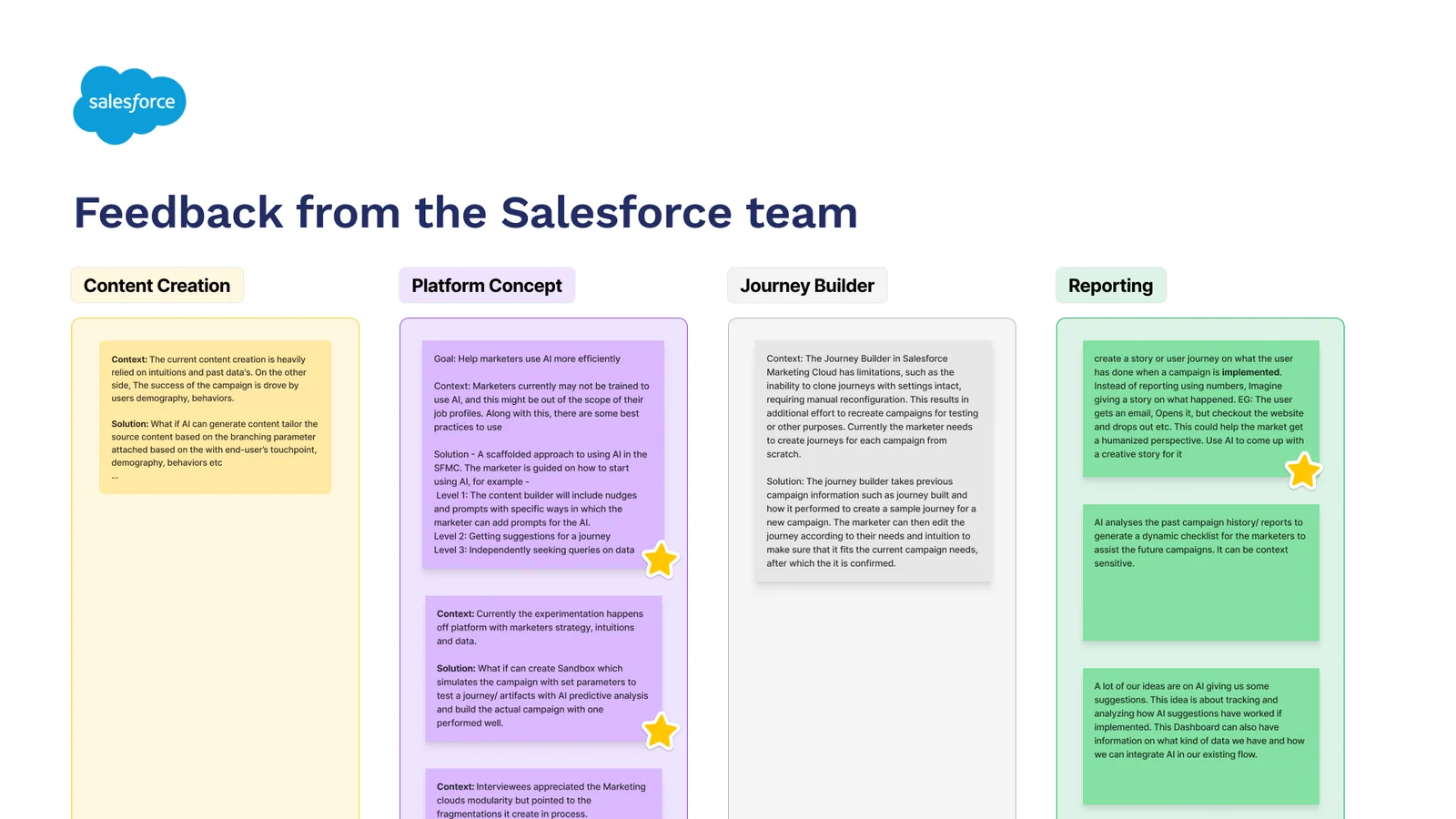
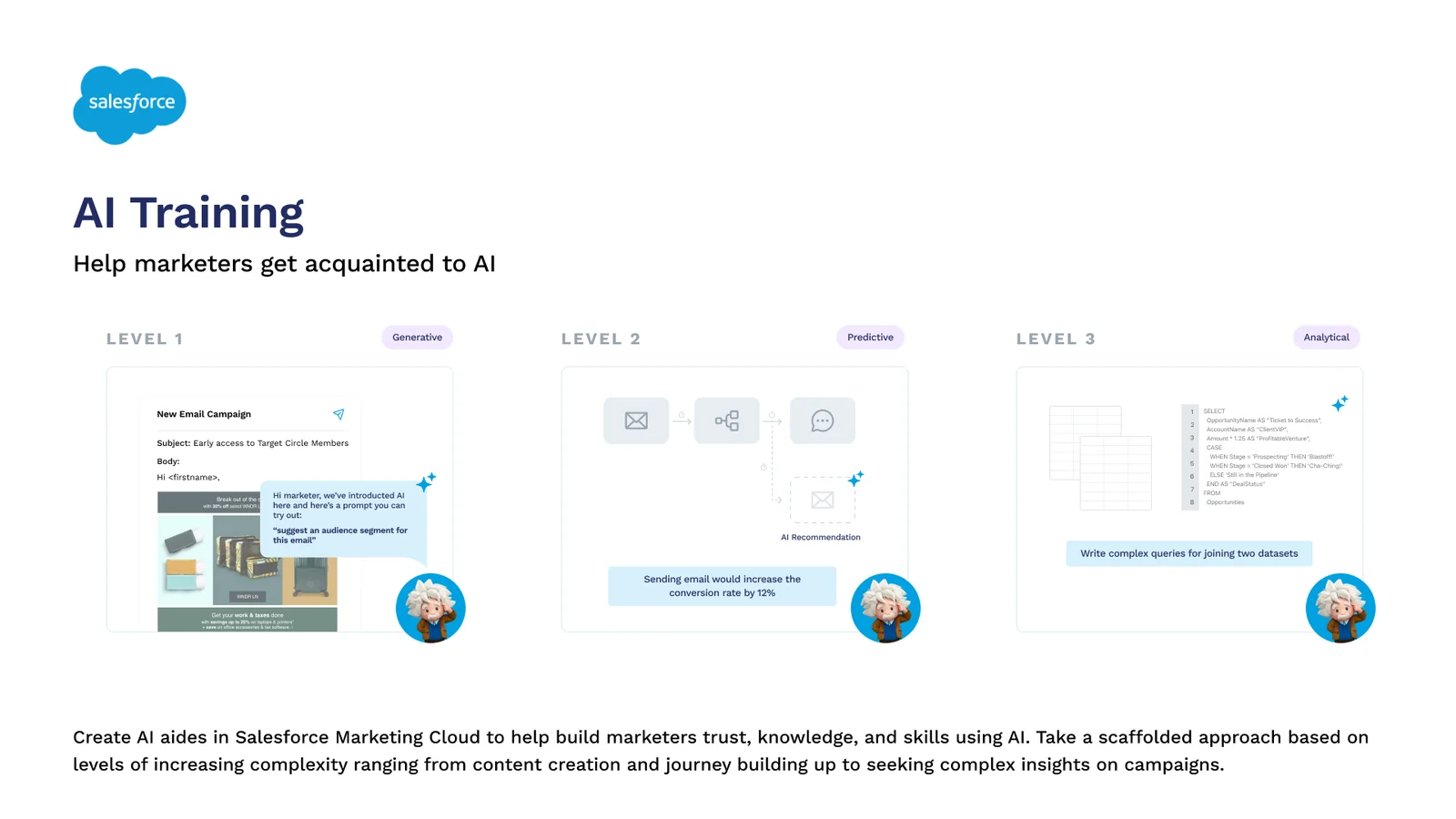
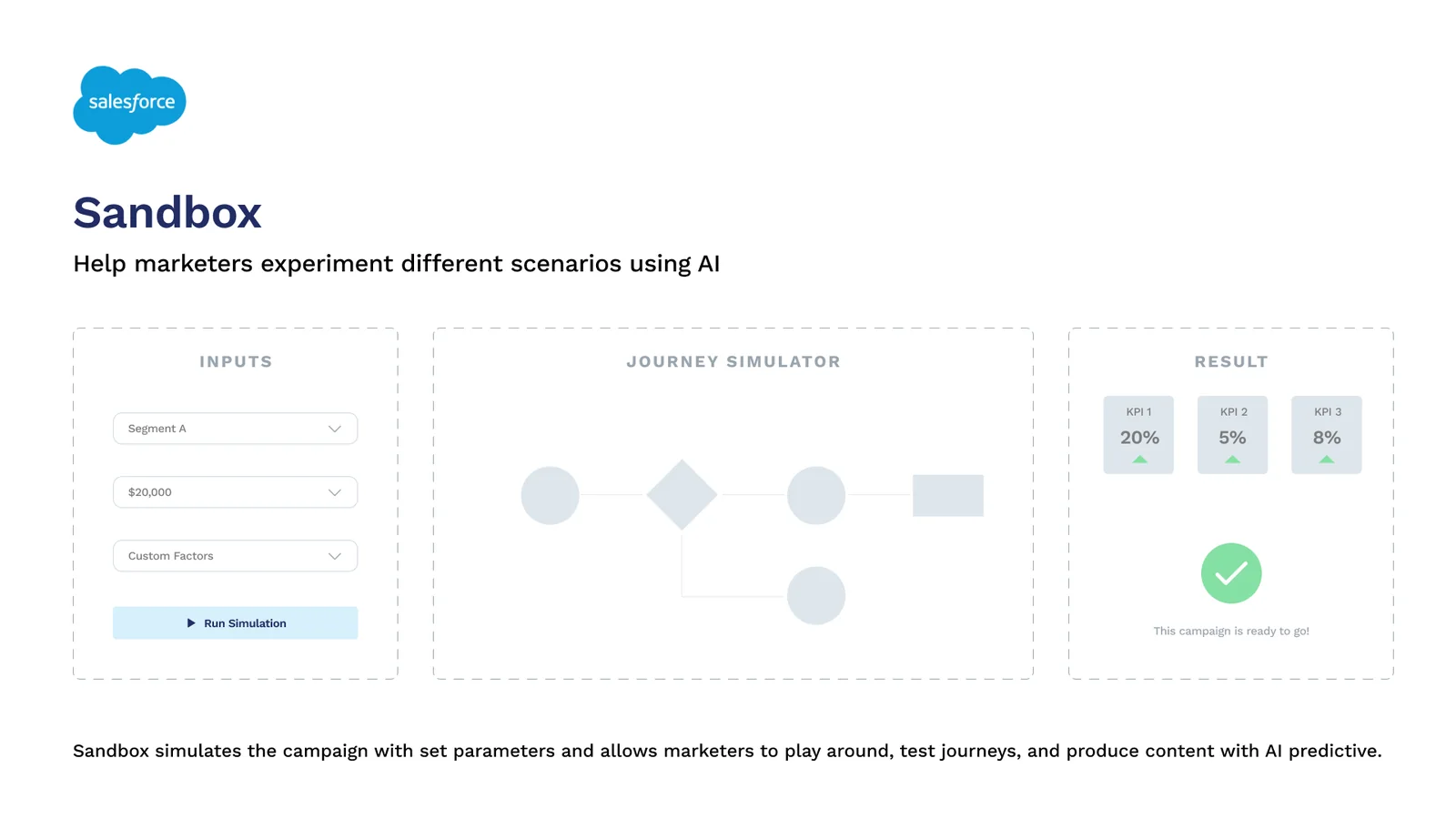
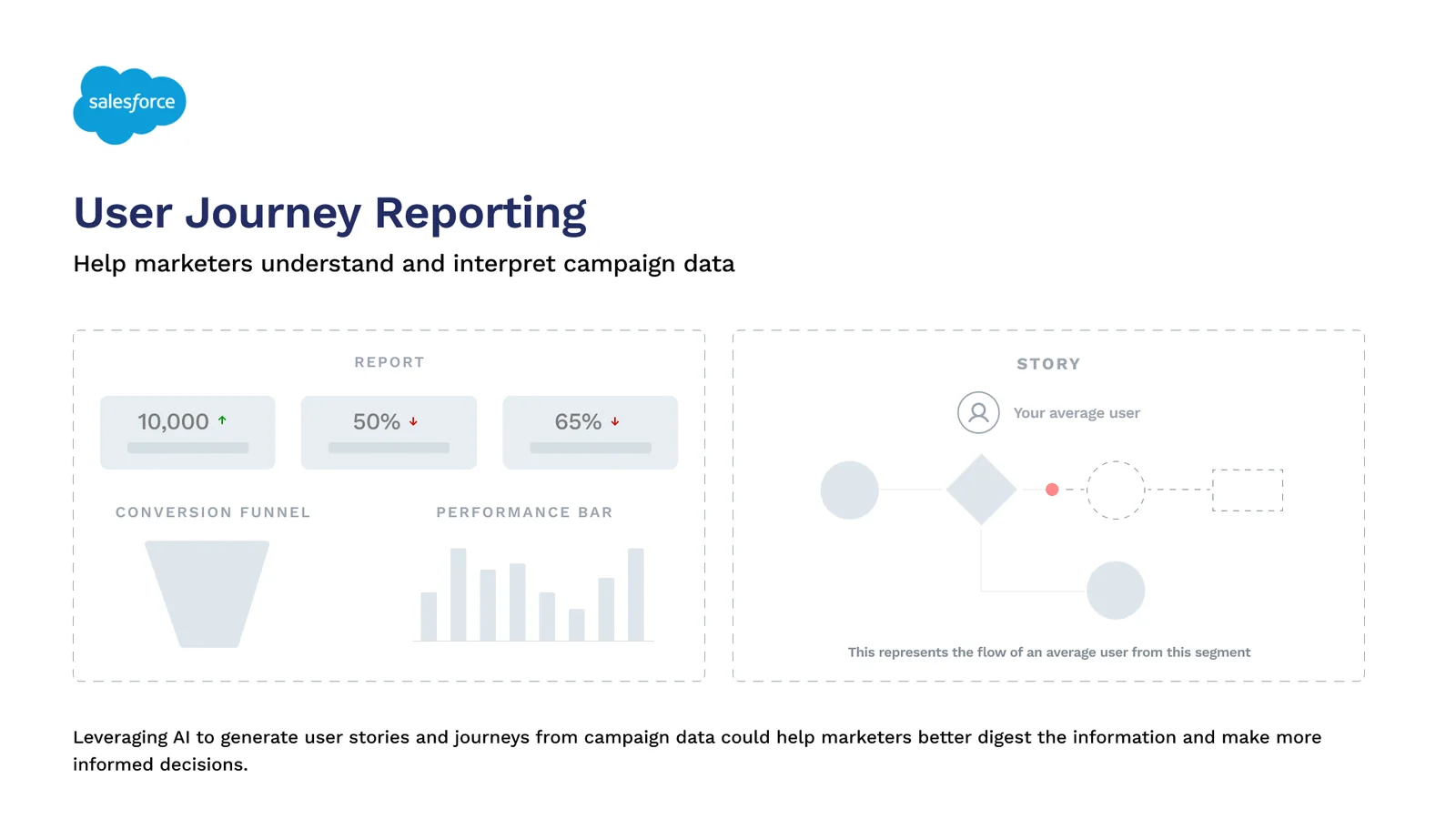
We ran an ideation round and Crazy 8s, grouped the ideas into content creation, the platform, journey building and reporting, and took them to the Salesforce team, who starred the ones worth pursuing. Three made the cut.
The pivot
Each concept asked marketers to hand AI a judgment call: writing their copy, predicting outcomes, interpreting results. That's where they trusted it least, and where its mistakes are hardest to catch.
Our second round of research kept pointing somewhere smaller. The moment that hurt most wasn't a big decision. It was the last step before every single send: marketers email a test to themselves, skim the preview, and deploy without being sure it's right. Checking is tedious, rule-based and easy to verify, which is exactly the work AI does reliably, with a person who can see every change.
So we flipped the question. Instead of teaching marketers to use AI, let AI check the marketer's work.
Our question for the final
How might we make the quality check less laborious for marketers?
Digging into how emails go wrong, we found the errors fall into four kinds.
Brand
Language that drifts from the brand's voice, colors outside its guidelines, a stretched logo. They slip through even with strict brand books.
Accessibility
Missing or weak alt text and too little color contrast. Most marketers have no accessibility training, so this is largely guesswork.
Links
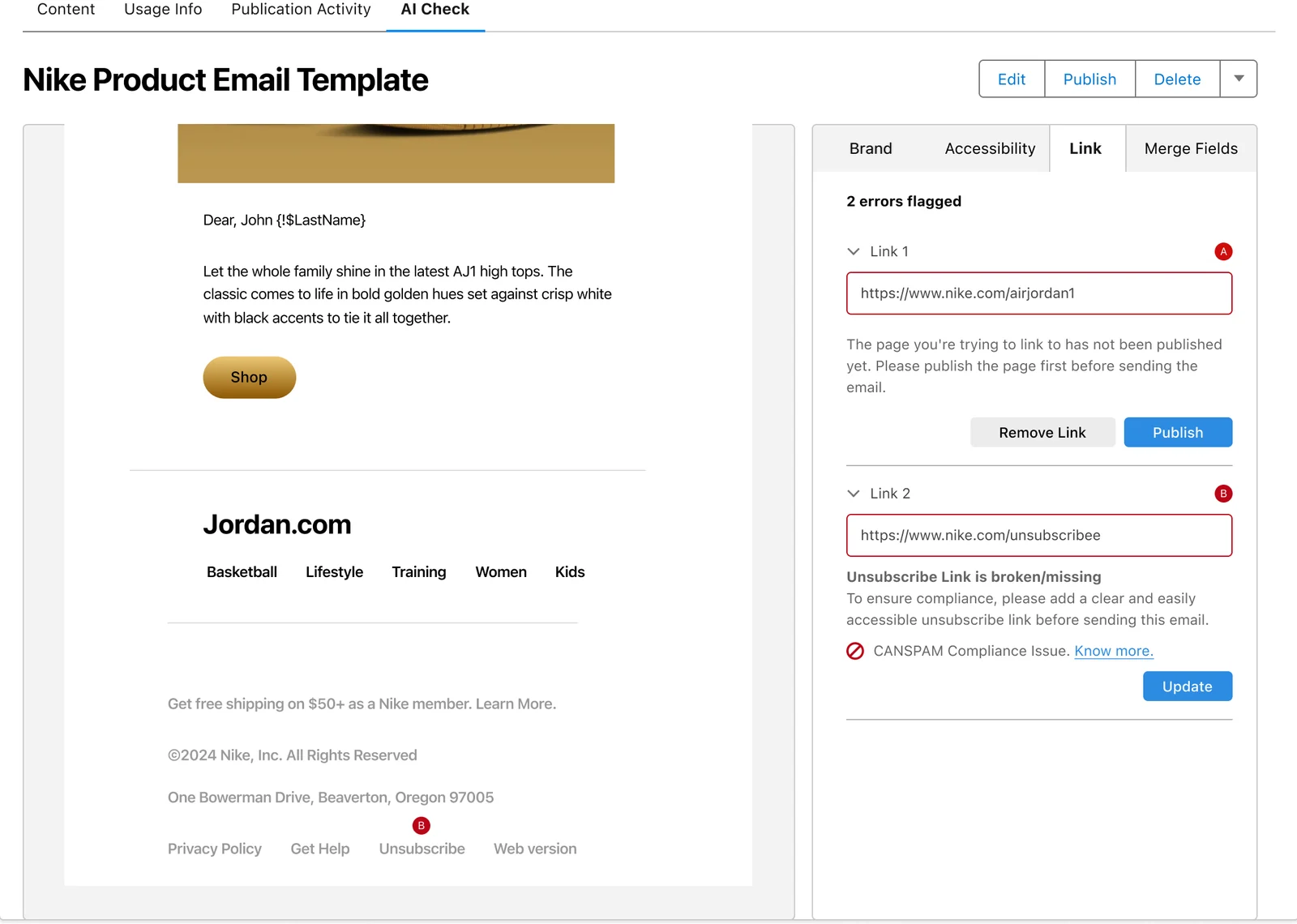
Links to pages that aren't live yet lower clicks, and a broken unsubscribe link is a compliance problem, not just a bad experience.
Merge fields
Missing data shows up in a customer's inbox as a raw tag where their name should be, and checking thousands of contacts by hand isn't possible.
Einstein QA Check
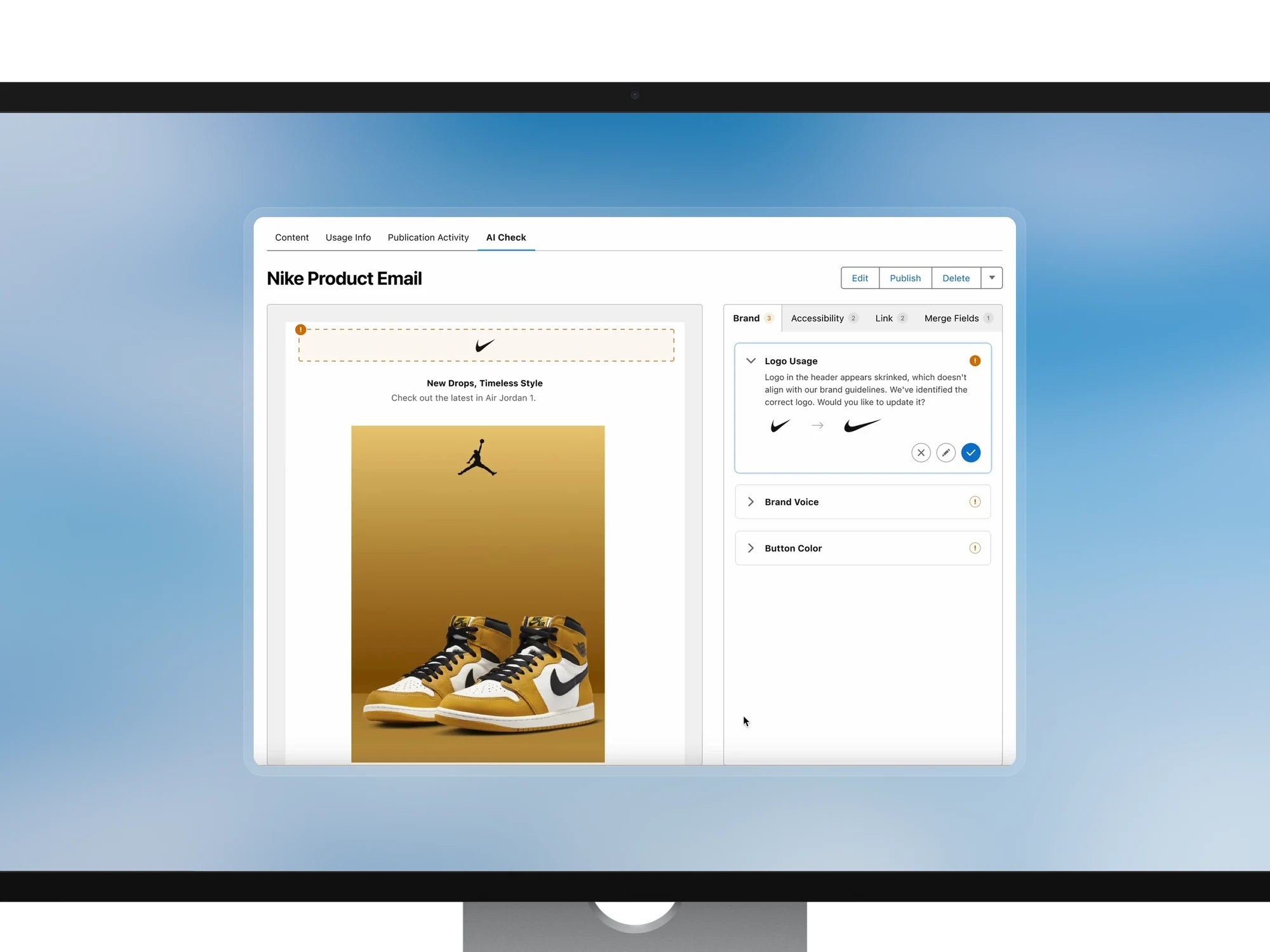
Einstein QA Check is an AI Check tab in Marketing Cloud's content workspace. Einstein reviews an email against the brand's own guidelines and flags every issue by kind, pinned to the spot in the email where it happens. Each suggestion says what's wrong, offers a fix, and waits for the marketer to accept, edit or dismiss it.
Teach it the brand once
An admin turns the checks on in Setup and uploads the brand guidelines. Einstein reads the document and pulls out the logos and colors it will check every email against, and they stay editable.
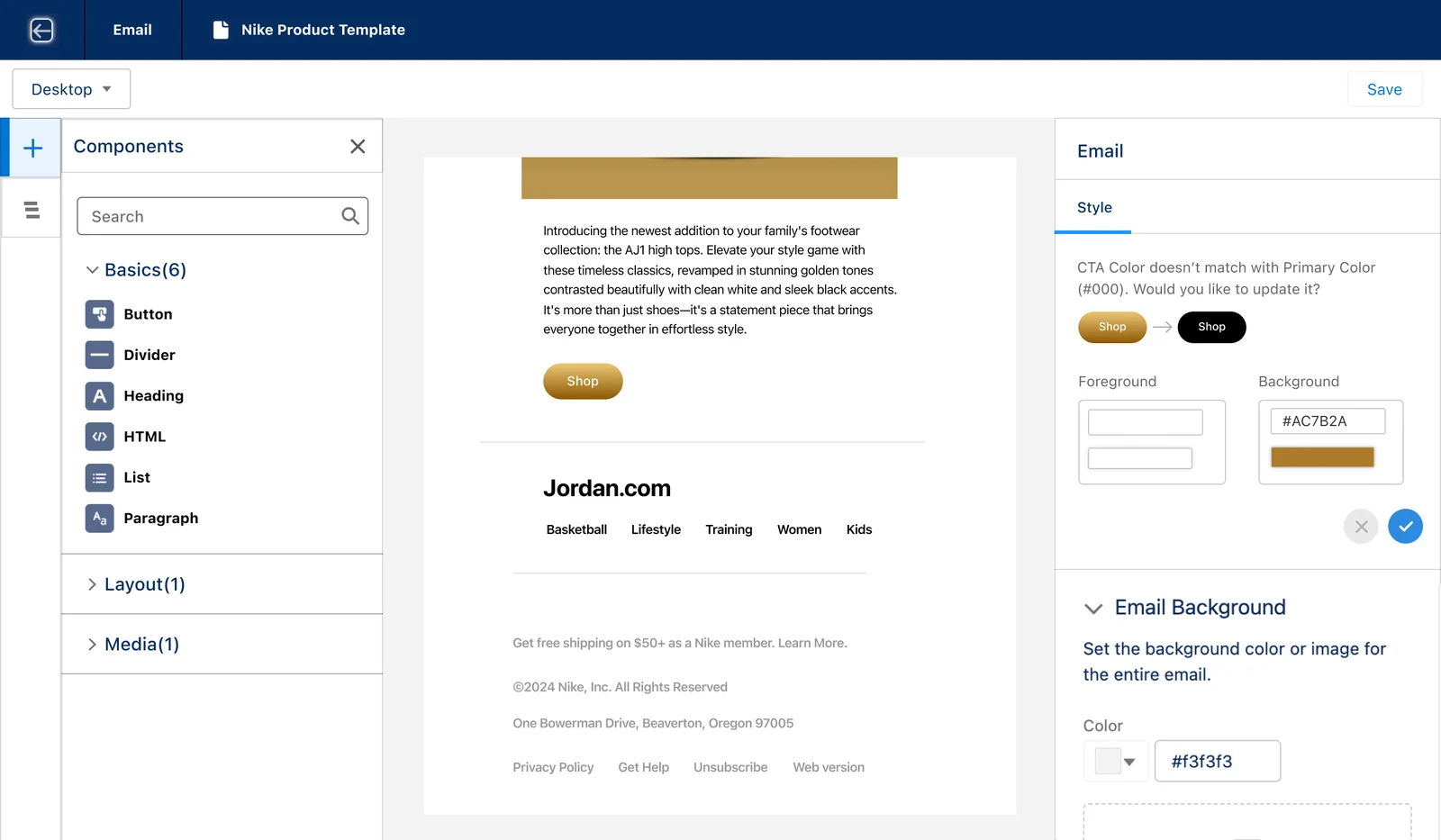
Brand
It checks the email against the brand guide the admin uploaded, and every catch comes with the fix.
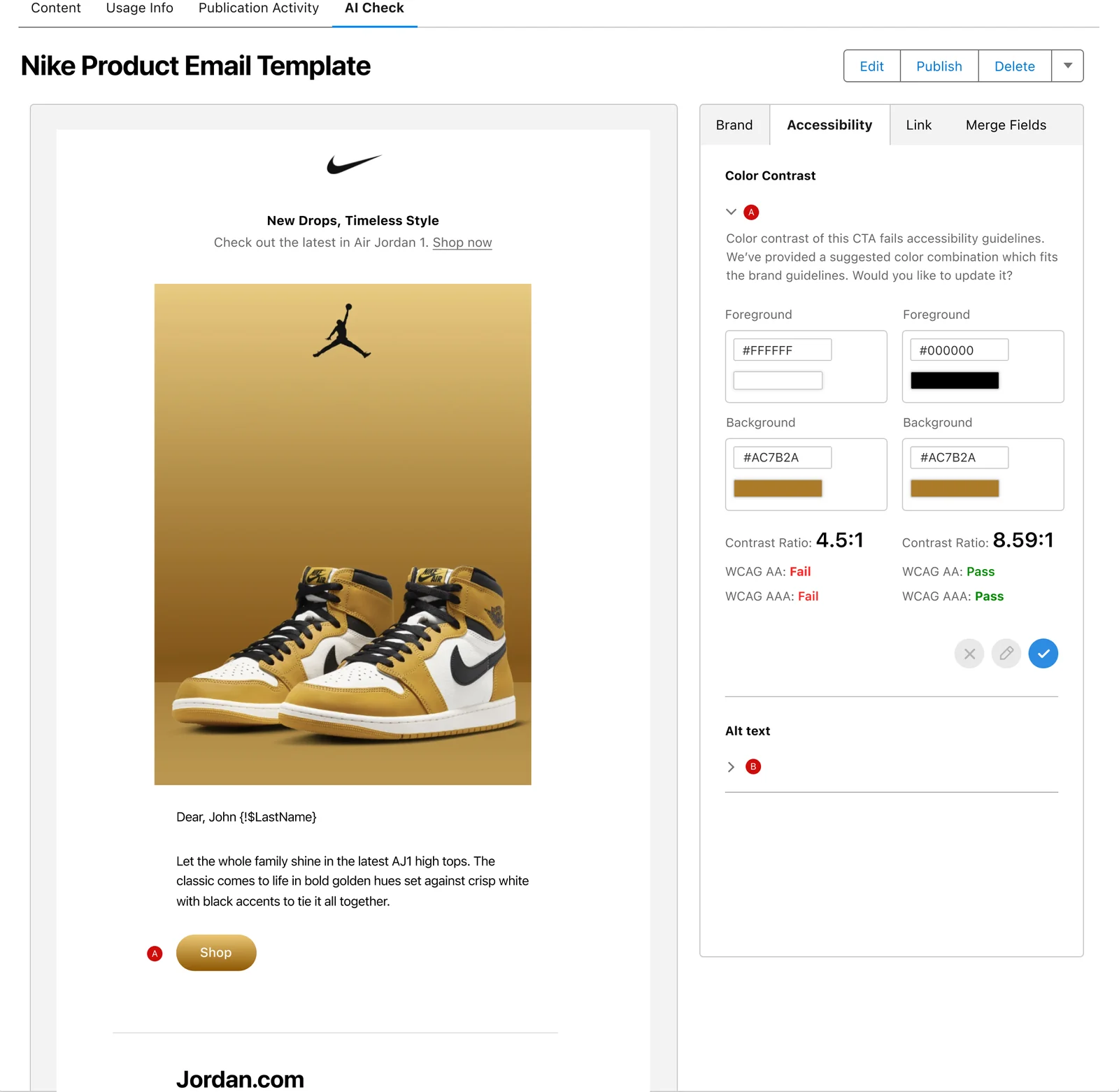
Accessibility
Most marketers have no accessibility training, so the panel does the measuring and explains the result.
Links
Every link is followed before the email goes out.
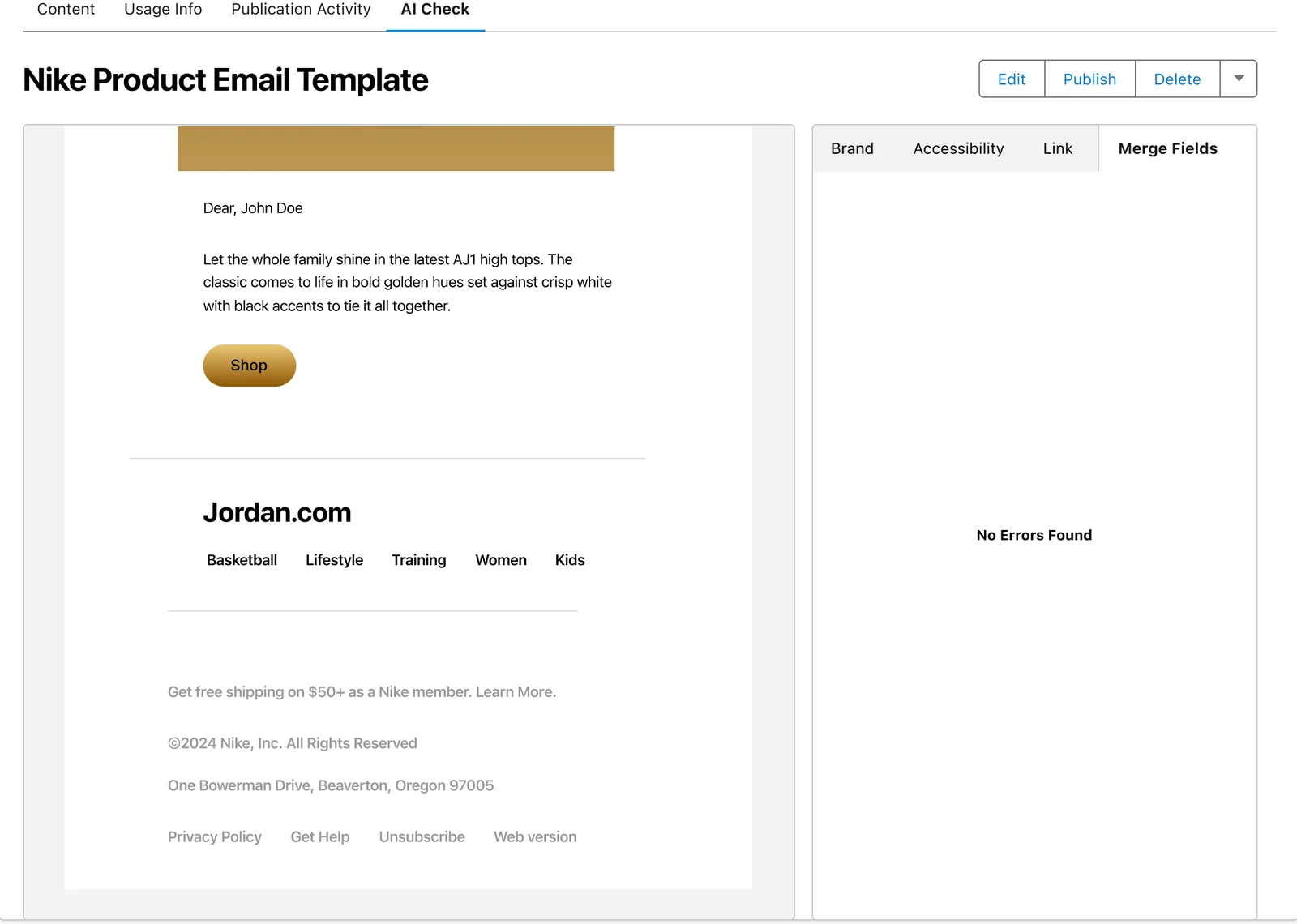
Merge fields
It runs a mail-merge test against real contacts. When some of them have no last name, it suggests a merge field that has data, or a change to the content, until nothing is left to fix.
Designing AI people can trust
Salesforce's own principles for trusted AI shaped every interaction in the panel.
Human in the loop
Nothing in the email changes on its own. Every suggestion waits for the marketer to accept, edit or dismiss it.
Transparency
Each issue is pinned to its spot in the email and lettered to match its card, so it's always clear what Einstein looked at.
Explainability
Suggestions show their reasoning: the contrast ratio and the guideline it fails, the brand rule a sentence breaks, the contacts missing a name.
Future scope
Once an email is correct, the next question is whether it works. We sketched two directions that build on the same panel.
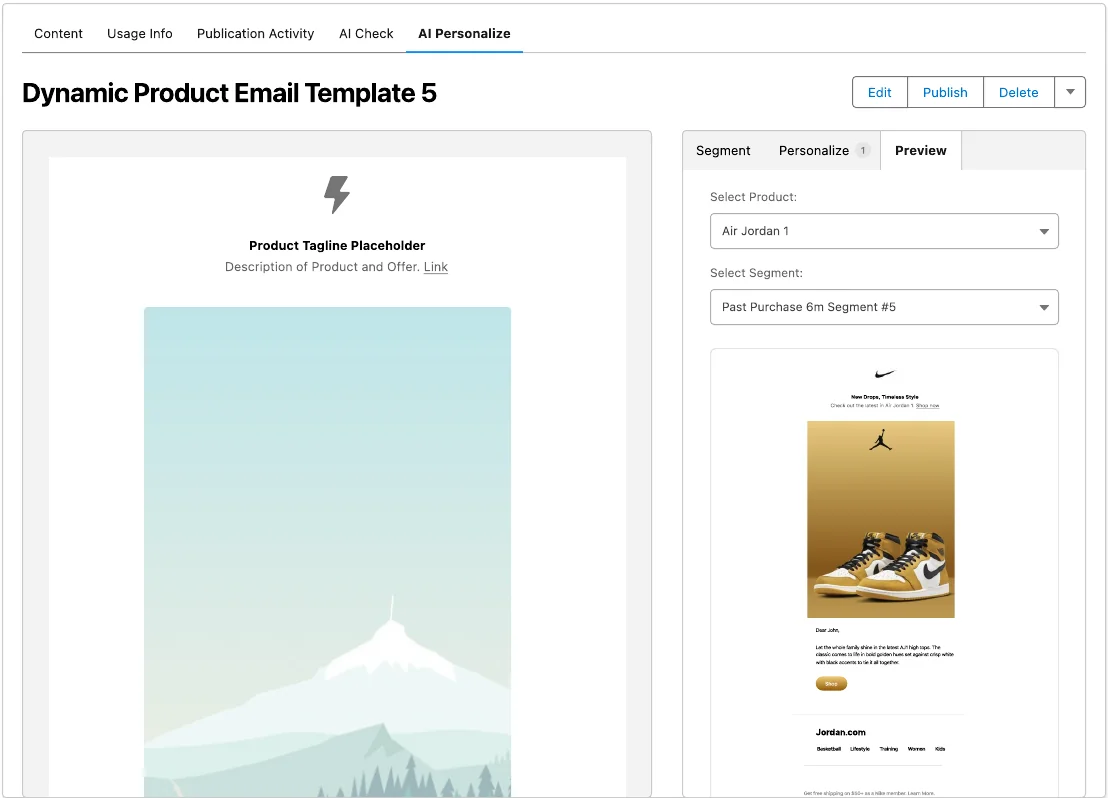
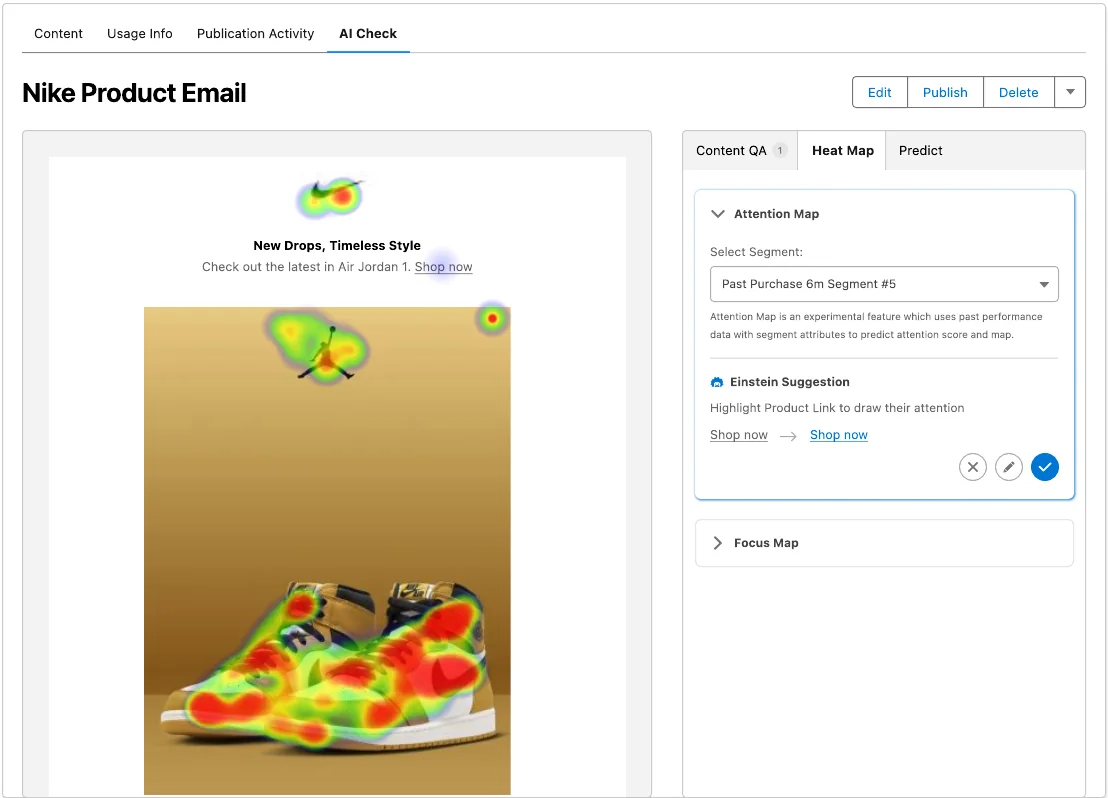
Outcome & reflection
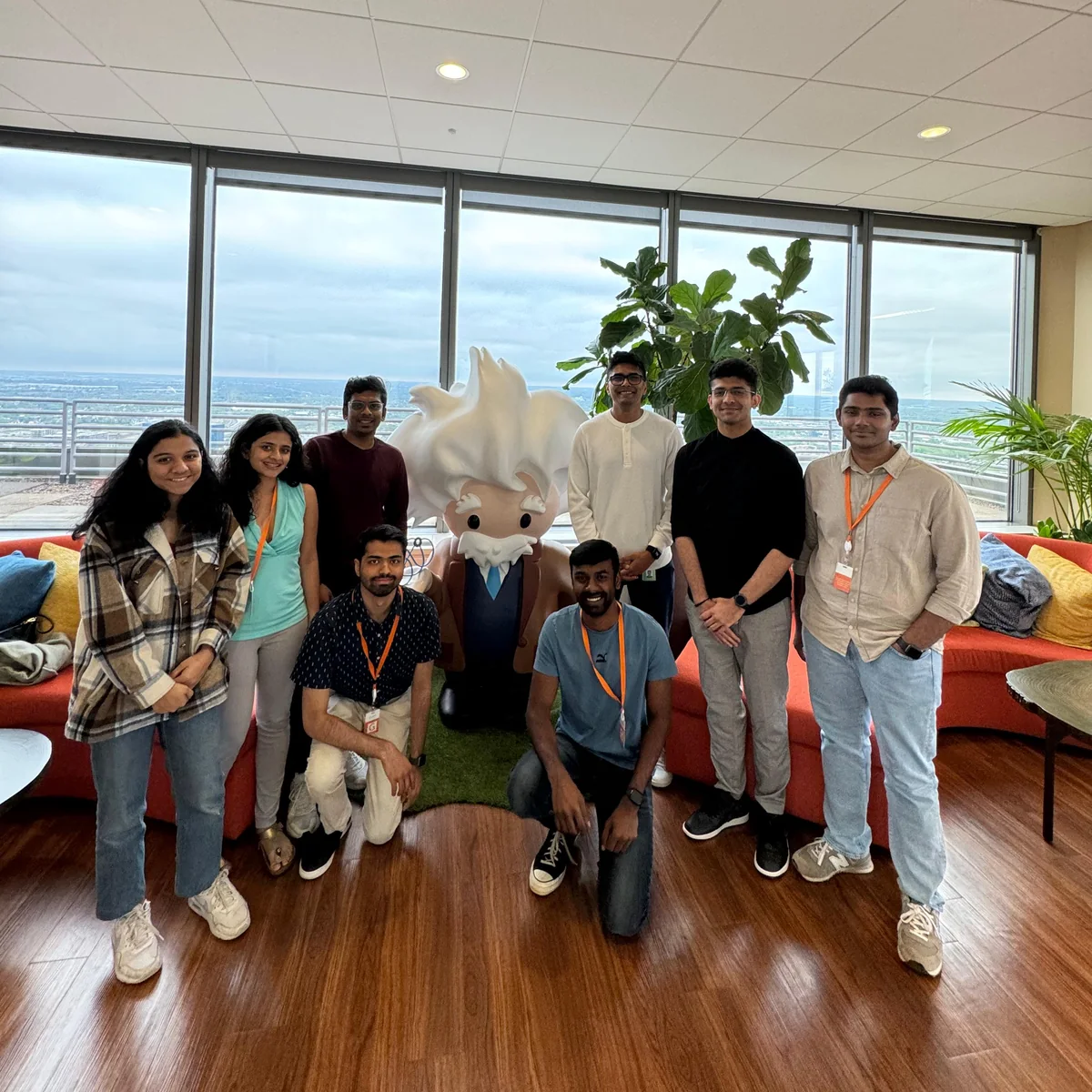
Presented at Salesforce Tower
We presented Einstein QA Check to our Salesforce sponsors at Salesforce Tower in Indianapolis in April 2024, walking through the research, the pivot and the prototype.
Put AI where it can be checked
The pivot taught me the most. AI earns adoption fastest on work people can verify. A flagged contrast ratio is easy to trust; a generated campaign is not.
Small, frequent pain beats big, rare pain
Every email passes through the final check. Fixing a step that happens with every send mattered more than reimagining a decision that happens once a quarter.
Show the reasoning, not just the result
The suggestions that felt usable were the ones that explained themselves: the ratio and the guideline it fails, the brand rule a sentence breaks, the contacts missing a last name.
Test with the people who'll use it
We reviewed the design with our Salesforce mentors, not with working marketers. With more time, usability testing with marketers would have been the next step.